Pages

Showing posts with label Emotions. Show all posts

Monday, November 12, 2012

Commons myths of Bipolar


Bipolar disorder is a serious and difficult illness that affects all facets of a person’s life: their education, work, relationships, health and finances, said Julia A Fast, author of several bestselling books on bipolar disorder, including Loving Someone with Bipolar Disorder and Take Charge of Bipolar Disorder, and a coach who works with partners and families.


Fast was diagnosed with rapid-cycling bipolar disorder II at 31 years old in 1995, a time when very little was discussed regarding the diagnosis. Fortunately, knowledge and media coverage of bipolar disorder have improved dramatically over the years. “I’m astonished at how much more people know about the illness,” she said.

Looking back at my early childhood it is evident that I had bipolar, but it wasn’t until I was 24 that I was officially diagnosed and began my years of trial and error of medications.
Even TV shows are featuring more accurate portrayals of bipolar disorder. “In the past, people with bipolar disorder were practically frothing at the mouth,” Fast said. Today, writers and producers make it a point to get it right. Recently, Fast served as one of the advisors on the hit Show-time series “Homeland” and talked with Claire Danes about her character’s bipolar disorder.
While information has gotten much better, many misconceptions still exist and endure.
Below, you’ll find five persistent myths about bipolar disorder

1. Myth: Bipolar disorder and depression are completely different diagnoses.
Fact: Bipolar disorder and depression — also known as unipolar depression — are not completely different illnesses, according to Francis Mondimore, MD, associate clinical director of the Department of Psychiatry at Johns Hopkins. In fact, he believes this is one of the most misunderstood ideas about bipolar disorder. (He blames psychiatrists for the misconception.)
Patients who believe this myth may oppose the diagnosis “if they don’t have the full-blown ‘medications-depressive’ picture and also resist taking “bipolar” medications like lithium,” said Dr. Mondimore, also author of Bipolar Disorder--A Guide to Family and Loved Ones.
It’s more accurate to think of bipolar disorder and depression as “probably represent[ing] two ends of a spectrum of illnesses,” he said. “The designation ‘bipolar II’ has helped crack this a bit, but this is why the term ‘bipolar spectrum disorder’ continues to gain ground,” he said.

2. Myth: People with bipolar disorder experience dramatic mood swings followed by complete remission of symptoms.
Fact: Some people with bipolar disorder experience this pattern, Mondimore said. (Lithium is typically very effective for these individuals, he said.) However, “Many patients have periods of residual symptoms and less severe but still significant mood fluctuations between episodes of more severe symptoms,” he said. This is especially common if people don’t engage in healthy habits to manage the illness.

3. Myth: Medication is the only treatment for bipolar disorder.
Fact: Medication is an important part of managing bipolar disorder. But it’s not the only answer. Viewing medication as your only treatment option “can lead to fruitless reaches for the ‘right’ medication,” Mondimore said. And it can lead you to avoid making valuable lifestyle changes and seeking therapy, he said.

As Fast writes on her website, “Medications take care of half of the illness, the other half is management.”

Both Fast and Mondimore stressed the importance of leading a healthy lifestyle, including avoiding alcohol and drugs, cultivating good sleep habits, exercising and effectively coping with stress.
Fast includes medication and alternative therapies as part of her treatment plan. Still, she cautioned against thinking “that we can exercise, diet, meditate, walk and rethink our way out of this illness.” (In fact, this is another big myth that persists, Fast said.)
Think of bipolar disorder like any other long-term illness, such as diabetes and high blood pressure, Mondimore said: It requires commitment and comprehensive management.

4. Myth: After having a severe episode, people with bipolar disorder should be able to bounce back.
Fact: If a person with bipolar disorder experiences a severe episode — one that requires hospitalization, for instance — there’s an expectation that afterward they’ll be able to get back to their work and life, Fast said. However, she equated this scenario to people who’ve been in a car crash. You wouldn’t expect someone with broken bones simply to get up and start sprinting.

5. Myth: People with bipolar disorder aren’t trying hard enough.
Fact: People wonder why someone with bipolar disorder just doesn’t try harder. They think that if they exert more effort, they’d have the life they want. They wonder why everyone else who experiences mood swings can cope with them but someone with bipolar disorder can’t. Sometimes Fast has even wondered the same thing about herself.

But this implies that bipolar disorder is a choice, she said. “Would you ever say that to someone with diabetes or pneumonia?” she said.
People just don’t realize how serious bipolar disorder is, Fast said. Thankfully, though serious, it’s highly treatable. Managing the illness is hard work, and finding the right medication takes time. But as Fast said, “Keep trying. Never give up.”

Monday, June 11, 2012

Powerlessness = Choice


I met a man recently who is a lot like me. I don't want to be like this man.

Psychiatric hospitals are places you will always meet characters. Some you forget; some stick out.

I'm bipolar and 37, but look no older than 25. He is also bipolar, but 45 and looks no younger than 65. We are a lot alike. Both have succumbed to our manic states. Both experience disabling depressions. Both have lived years of abusing alcohol and drugs with bouts of binges. Both have ruined ourselves financially. Both have divorced. Both have alienated friends and family in the past. Both have been in trouble with the law. Both have received undeserving grace. Except.....

Thursday, May 17, 2012

How do you know when to let go


How do you know it is time to let go? In one sentence:

            When you feel any kind of unpleasantness or discomfort.

You can consider unpleasantness or discomfort a clear sign that it is time to let go.

And I'm no stranger to letting go. Letting go has become a common practice of mine. Probably too much of a common practice that it leaves me unable to get close to others. Letting go has no longer become a problem for me.

But for some letting go is heartbreaking. And in some situations it's completely understandable. Not all things are equal to let go.

By letting go, we actually allow more of the mystery of life to come in for us.-- Leslie K. Lobell, M.A.

Letting go. It's difficult for us in so many ways and on so many levels. Yet life calls us up to do it, over and over again. Letting go is part of our growth process. We cannot move on to the new while continuing to cling to the old. For some we let go for their sake and not for ours. And why doesn't it feel like a learning process?

For some of us, we must let go of a past relationship. Or even a current relationship. Or just lesson the relationship. Maybe the relationship was not meant to be: perhaps it was hurtful to us, or perhaps it was hindering the personal or spiritual growth of one or both.  Perhaps we have no problems leaving the person behind, but we continue to harbor animosity. 

Thursday, May 10, 2012

Truth is not enough


Wish I had learned an invaluable lesson years ago. I'm trying to learn it now but I've always proven to be too hard headed. Too stubborn. The irony is that I've always fooled myself into thinking that I was the one taking charge.

Lately I have been having hard time dealing with my bipolar. I'm not referring to its symptoms, but the coping and dealing. I cycle so unpredictably. It gets the best of me and it is wearing me out. I'm tired from it mentally, physically and even spiritually. It's exhausting. What's worse is that it seems to worsen with each episode.

Scripture says that the truth will set us free. It seems to me not applying everything  of this wisdom from life's lessons learned is enough. I knew the truth years ago that whatever we focus on we become. It's the truth. But it hasn't set me free.

Do we all not know that E=Mc2? It's a fact. It's the truth. Now can you pass an advanced physics class and explain the concepts of mass-energy equivalences? Just knowing a truth is not enough.

Monday, April 23, 2012

Accepting or tolerating a bipolar diagnosis


I wasn't diagnosed with bipolar until I was twenty-four. Generally, most people with bipolar don't even show symptoms until in their early twenties. But I had spent the previous few years misdiagnosed with depression and obviously mistreated. And that was after dealing with it in my childhood and teenage years. At the time of my correct diagnosis I knew nothing of bipolar so I had nothing to prejudge it by. That was in 1994.


Looking back I always get aggravated at the dr. who finally diagnosed me. She said it in a "matter of fact" tone and that was it. No explanation. Only minor basics. No descriptions. There was no "ah ha!" moment because I had no idea what she was talking about. A label means nothing without an explanation.

It wasn't until years later that I sought real treatment for "this diagnosis." That was in 2000 when I started going to our state mental health program.

I fought my treatment. I despised my pills. I hated the idea of having to take them. I either hated the side effects or the idea of knowing I'm going to have to take these handful of pills for the rest of my life.

At times I enjoyed the hypomania, the mania. I missed them when the meds worked.

Thursday, July 21, 2011

The comfort of guilt


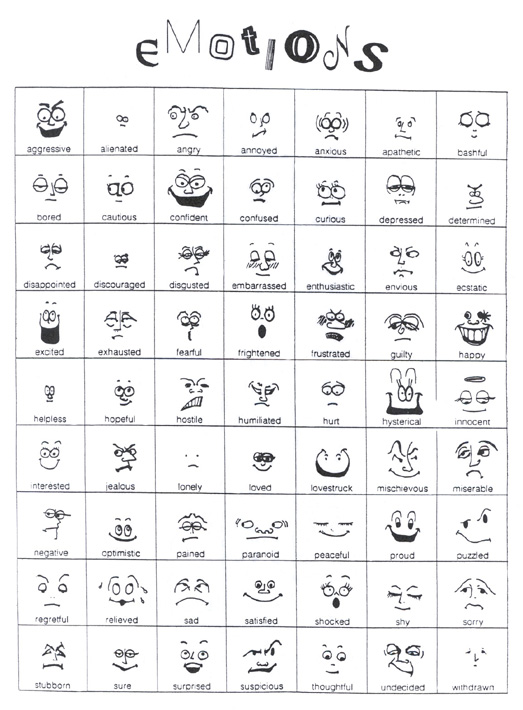
Bipolar is haunted with a number of emotions. Anyone who walks around carrying the diagnosis will tell you so. Any mental illness carries its own number of lingering emotions. It is after all a mood disorder of depression, anger, frustration, excitement, happiness, joy, pride...I could go on.

Even the most caring people in a person with bipolar's life can stigmatize against them without realizing it by most often associating them with the "stereotypical" bipolar emotions. Of all the emotions related to this disorder the one most overlooked is the feeling of guilt.

Growing up, and even in our adult years, we've all had things we swore we've never do. We've had dreams and goals we wished to accomplish. An idea of the person we wanted to be. But what happens when that changes? What happens when those dreams don't come true? What happens when you realize you're not the person you'd hoped to be? Today I am no where close to where I had hoped to be years ago.


Saturday, July 16, 2011

Hating haters makes me a hater

Have you ever been hated? I mean truly hated for one reason or another. For what you are. For what you have. I'm not talking about some spat between friends who piss each other off. I'm talking pure hatred that would cause someone to literally go out of their way to destroy your life or at the least make you miserable.

I have. I have known and experienced true hatred. Hatred that was bread out what of what I am, bipolar. I don't care what people say trying to be positive and supportive. Bipolar is who am. It's not what I have. It's been a part of me since childhood so you can't separate the two.
What is it about me, that makes people hate? I wish someone would tell me. God they're so mean. I've been mocked and ridiculed by law enforcement. Told my wife and children would be off without me. Told I wasn't worthy to speak. Told I was a piece of a shit and slammed down onto counters and the ground more than once by law enforcement. Yes, I made my mistake of driving under the influence. But in my defense I was under psychosis. I was locked in a cell wearing nothing a paper gown after informing them of my condition and denied medical care.

Tuesday, May 3, 2011

The test of all happiness is gratitude

"This guys awesome." "Lupe, you're the best." "Lupe, I just want let you know we appreciate you so much." "Lupe, I don't know what we would do without you." "Lupe, is there anything you can't do?"

That's some of the brags I receive at work. Although I'm sure gotta be exaggerations. I'm not bragging on myself but to tell you the truth, it really feels good to hear them and it makes me feel grateful to know I'm appreciated and recognized. They are grateful for me and I'm grateful that they are.

I'm supposed to teach on Gratitude this coming Thursday evening at Celebrate Recovery and to be honest I don't feel very grateful for much. I'm having a hard time writing up what to say in spite of how much I'm praying about it. I know being grateful shouldn't have anything to do feelings, but if gratefulness was so easy it wouldn't have to be taught upon. My emotions seem to rule me rather than me ruling them. When it comes to gratitude, practicing keeping things in perspective is easier said than done.

For the sake of privacy I won't go into detail, but there's more than one relationship issue going on and my own personal life and questions about direction in my life. Not to mention my health. Things could be worse. Some things were worse a little over a year ago. But some things remain, while others are worse.
 

Where my inspiration comes from

A Recycled-Dad with Bipolar & Parkinson's, reflections on fathering and family life and other stuff thrown in there...you'll love my Soap Box Rants

Blog with Integrity

BlogWithIntegrity.com\\ Auhor Lupe Picazo

Why I call myself a Recycled Dad

I call myself a Recycled Dad because of the struggles with remarriage and being a step-parent and weekend dad. This is also about my life living with bipolar and how it affects me personally, my family and my job. It also reflects on the grace God has poured out on me throughout recovery from alcohol and an eating disorder. Recycled Dad is about my reflections on the wisdom God teaches daily on fatherhood and being a better husband in spite of being bipolar.

Please feel free to leave comments. I welcome them